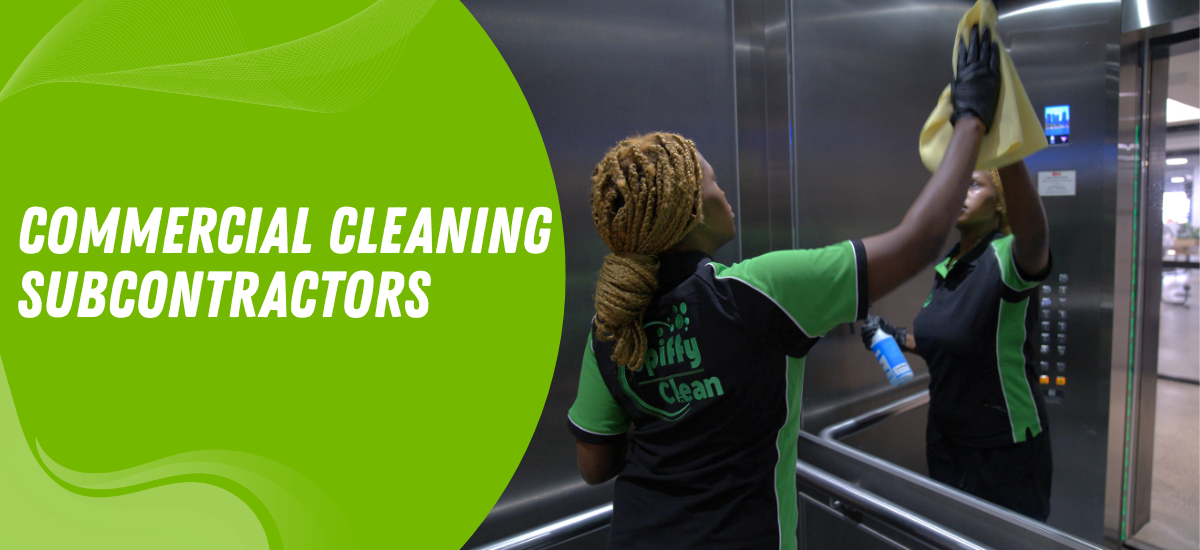
Commercial cleaning companies vary in how they staff their services. Some operate with directly employed cleaners trained, managed, and insured in-house. Others outsource the work to third-party contractors they don’t directly control. Directly employed cleaners follow consistent procedures and a single quality framework. Subcontracted teams don’t always get that, which leads to accountability gaps, inconsistent standards, and site-access risks.
Table of Contents
ToggleAccording to Spiffy Clean, a provider of commercial cleaning services in Melbourne, “businesses get better consistency and accountability when every cleaner on-site is directly employed, trained, and managed under one quality system rather than sourced from a third-party contractor.”
What Problems Can Subcontracted Cleaning Cause for Your Business?
Inconsistency is the most common complaint businesses raise when subcontractors are involved, because no two subcontracted teams will follow the same process unless the principal company enforces that rigorously.
- Training gaps: Subcontractors often complete onboarding with their own employer, not the company whose name is on your contract, which means the standard of cleaning can drift depending on which team shows up that week.
- Accountability issues: When something goes wrong, a subcontracting arrangement creates a grey zone between the cleaning company and the contractor, making it harder to resolve complaints quickly or trace who was responsible for a missed area.
- Security risks: Businesses in regulated industries can’t always verify that subcontracted cleaners have undergone the same police checks or induction processes the main company claims as its standard.
- Schedule breaks: Subcontractors juggle multiple client commitments independently, and when their own workload changes, your cleaning schedule is often the first thing that absorbs the disruption without notice.
So if a company can’t clearly answer who employs the cleaner arriving at your premises, that’s worth pressing before you sign anything. Office cleaning services in Melbourne that rely on direct employment models tend to produce fewer complaints and more stable long-term service outcomes.
How Do You Know If a Cleaning Company Uses Its Own Staff?
The simplest approach is to ask directly during the quoting process, because reputable providers won’t dodge the question.
- Direct employment question: Ask whether the cleaners assigned to your site are directly employed by the company or engaged as independent subcontractors, and request confirmation in the service agreement.
- Insurance verification: A company using direct employees should be able to provide a copy of their public liability policy and confirm it covers all staff attending your premises, not just the business entity itself.
- Staff induction records: ISO-certified providers like Spiffy Clean document cleaner training, site-specific inductions, and compliance records, which is far harder to maintain when cleaners aren’t employed in-house.
- Named site team: Companies that genuinely manage their own staff can usually tell you who will be cleaning your site regularly, rather than offering a rotating cast of contractors depending on availability that week.
A company that uses its own staff knows exactly who is on-site, what they’ve been trained on, and what quality standard they’re held to. That’s not a small distinction. Read our blog on choosing commercial cleaning in Melbourne for more questions worth asking before you commit to a provider.
Why Choose Spiffy Clean?
Jack Sidhu, director at Spiffy Clean, is an ISO 9001, 14001, and 45001 certified commercial cleaning company in Melbourne with over 500 businesses served across Melbourne and beyond, offering directly employed, police-checked, and fully insured cleaners operating under a structured quality management system. Every site is assigned a trained team, a documented cleaning plan, and a dedicated client manager, not a rotating pool of subcontractors.
Clients don’t just get a cleaner. They get a consistent team that knows the site, follows a verified process, and is held accountable to standards that don’t shift between visits.
Concerned about who’s actually cleaning your office?
FAQ
No, some use directly employed in-house staff with full training and insurance accountability.
Yes, it’s legal, but it affects accountability, insurance coverage, and service consistency.
Ask the provider in writing and request confirmation in the service agreement.
Spiffy Clean operates with directly employed, police-checked, and trained cleaning staff.